Why Every Child Learns Differently: Brain Development and Learning Styles

Two children can sit in the same room, hear the same lesson, and walk away with very different levels of understanding. One remembers the diagram. Another needs to talk it through. A third only grasps the idea after building, touching, moving, or practicing.
That difference is not laziness, stubbornness, or lack of ability. It is often the result of how the child’s brain is developing, how quickly they process information, what captures their attention, and which learning conditions help them feel safe enough to try.
Learning is not one-size-fits-all. Children grow at different rates, bring different experiences, and use different strengths to make sense of the world. When adults understand this, they can stop asking, “Why can’t this child learn like everyone else?” and start asking, “What helps this child learn best?”

Brain development shapes how children learn
A child’s brain is still under construction. Areas linked to memory, attention, language, emotional control, planning, and problem-solving do not all mature at the same time. This is one reason a child may be strong in one subject and struggle in another.
For example, a child might read fluently but find multi-step math problems frustrating. Another may solve puzzles quickly but need extra time to explain ideas in writing. These uneven patterns are common because development is not a straight line.
Brain development affects learning in several key ways:
Attention
Some children can stay focused for long periods. Others need movement, breaks, or shorter tasks.
Working memory
This helps children hold information in mind while using it. A child with limited working memory may understand a concept but forget the steps.
Language processing
Some children learn quickly through spoken explanation. Others need visuals, examples, or repeated practice.
Emotional regulation
A worried, tired, or overwhelmed child may struggle to use skills they already have.
Executive function
Planning, organizing, starting tasks, and checking work all depend on developing brain systems.
The brain also changes through experience. Practice strengthens pathways. Supportive feedback builds confidence. Stress, shame, and constant pressure can make learning harder because the child’s energy shifts toward self-protection instead of curiosity.
A child’s learning profile is not fixed. It changes with development, experience, instruction, environment, and confidence.
This is why labels should be used carefully. A child who “doesn’t like reading” may have trouble decoding words, tracking lines on a page, understanding vocabulary, or sitting still long enough to finish. Each cause needs a different kind of help.
Learning pace varies more than many adults expect
Children do not all learn at the same speed, even when they are the same age. Age gives a rough guide, not a complete picture.
One child may understand fractions after one demonstration. Another may need real objects, repeated examples, drawing, and time to connect the idea to something familiar. Both children can learn. They may simply need different routes and different amounts of practice.
Pace can vary because of:
prior knowledge
sleep and nutrition
language background
confidence with the subject
sensory needs
attention span
motivation
stress at home or school
fine motor skills
reading level
processing speed
Processing speed is often misunderstood. A child who answers slowly is not always confused. They may be thinking carefully, sorting language, checking memory, or trying to avoid mistakes.
Fast learning also has its own needs. Some children grasp material quickly, then become bored or distracted when work is too repetitive. They may need deeper questions, creative challenges, or chances to apply ideas in new ways.
The goal is not to make every child move at the same pace. The goal is to help each child make steady progress.

Learning styles can help, but they should not become boxes
Many people talk about learning styles such as visual, auditory, reading and writing, or kinesthetic learning. These categories can be useful when they help adults offer variety. They become less useful when they turn into strict labels.
A child who likes pictures is not only a “visual learner.” A child who enjoys movement still benefits from listening, reading, drawing, and discussing. Real learning usually uses more than one pathway.
A better way to think about individual learning styles is this:
Children often have learning preferences, but they need flexible learning opportunities.
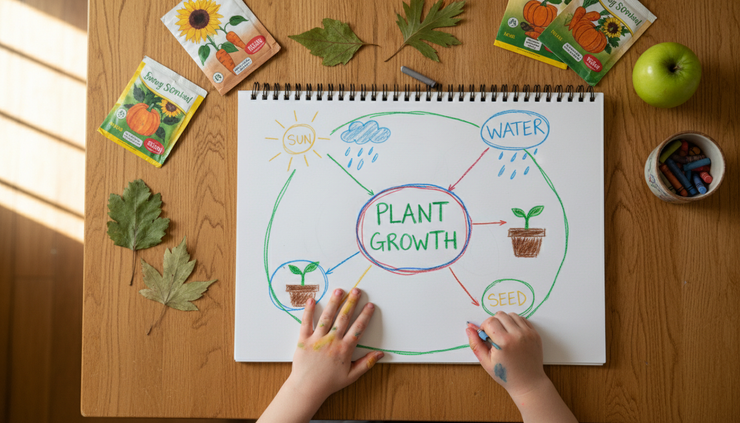
That means a lesson about plant growth might include:
a diagram of roots, stems, leaves, and flowers
a short explanation
real seeds and soil
a read-aloud book
a drawing activity
a chance to observe growth over time
simple writing or discussion afterward
Each part gives the brain another way to connect with the idea. The more meaningful connections a child makes, the easier it becomes to remember and apply the concept.
Visual learners often need to see the structure
Some children understand best when they can see the shape of an idea. They may benefit from:
charts
color coding
diagrams
timelines
maps
drawings
graphic organizers
written directions
examples shown step by step
A child learning to write a paragraph may do better with a simple visual organizer than a spoken reminder. A child learning place value may need base-ten blocks or a place-value chart before the numbers make sense on paper.
Visual support also helps reduce memory load. Instead of holding every instruction in mind, the child can look back and check what comes next.
Listening and language help some children process ideas
Some children learn well through conversation, storytelling, rhythm, and spoken explanation. They may remember what a teacher said, repeat facts aloud, or talk through a problem before solving it.
Helpful strategies include:
reading directions aloud
letting the child explain the idea in their own words
using songs or chants for facts
asking open-ended questions
pairing new vocabulary with examples
offering short verbal summaries
These children may still need visuals and practice. Spoken language is powerful, but it can disappear quickly. Combining speech with a picture, gesture, or written cue often makes learning stronger.
Movement and hands-on practice can make ideas real
Some children need to do something before an idea sticks. Movement can help attention, memory, and understanding, especially for younger children.
Hands-on learning might include:
counting physical objects
acting out a story
tracing letters in sand
building shapes with sticks
using counters for addition
pacing while spelling words aloud
creating a model before writing about it
Movement does not mean chaos. A well-planned hands-on activity gives the child a clear purpose. It turns an abstract idea into something the child can see, touch, test, and remember.
Motivation and emotion affect learning every day
A child’s brain does not separate learning from emotion. Confidence, fear, curiosity, frustration, and belonging all affect how well a child can focus and remember.
A child who has failed many times may avoid a task before even starting. This can look like defiance, boredom, or carelessness. Underneath, the child may be trying to escape embarrassment.
Supportive learning environments reduce that threat. They make it safe to make mistakes, ask questions, and try again.
Adults can support motivation by:
praising effort, strategy, and progress instead of only correct answers
giving tasks that are challenging but possible
offering choices when appropriate
connecting lessons to real life
breaking large tasks into smaller steps
celebrating improvement
avoiding comparisons between children
A child who feels capable is more likely to persist. Persistence matters because many skills require repetition before they become automatic.

Signs that a child may need a different learning approach
A child does not always say, “I need this explained another way.” More often, the signs show up in behavior, mood, or inconsistent performance.
Look for patterns such as:
understanding during discussion but struggling on worksheets
doing well one day and forgetting the next
avoiding reading, writing, math, or group work
rushing through tasks to be done
needing directions repeated often
melting down over homework
losing place while reading
forgetting multi-step instructions
learning better with pictures, objects, or movement
becoming distracted during long explanations
These signs do not automatically mean a child has a learning disability. They do suggest that the current method may not fit the child’s needs.
If struggles are intense, long-lasting, or affecting confidence, it may help to talk with a teacher, pediatrician, reading specialist, school psychologist, or other qualified professional. This article is for general information and is not a diagnosis or medical advice.
Practical ways to support different learners
Supporting different learning styles does not require a custom lesson for every child every minute. Small changes can make a big difference.
Use more than one way to teach the same idea
A strong lesson often includes seeing, hearing, saying, and doing. For example, when teaching a new word:
Say the word.
Show a picture.
Use it in a sentence.
Ask the child to say it.
Act it out or connect it to an experience.
Use it again later.
This gives the brain several entry points.
Break learning into smaller steps
Children often struggle when too many demands arrive at once. A writing assignment, for example, may involve planning, spelling, handwriting, grammar, memory, and organization.
Instead of saying, “Write a story,” try:
choose a character
choose a setting
say what happens first
draw the scene
write one sentence
add details
read it aloud
Smaller steps make success visible.
Give time to process
Some children need silence before answering. Others need to talk first. Some need to watch someone model the task.
A short pause can help. So can phrases like:
“Take a moment to think.”
“Show me how you started.”
“Tell me what part makes sense.”
“Let’s try the first step together.”
These prompts focus on process, not blame.
Make practice meaningful
Repetition helps the brain, but endless worksheets can drain motivation. Practice works better when it has variety and purpose.
A child learning math facts might use cards, games, number lines, oral practice, and quick written checks. A child learning spelling might trace, build, say, write, and use words in sentences.
The skill stays the same. The practice changes enough to keep the brain engaged.
Watch what works
Adults can learn a lot by observing.
Ask:
When does the child seem most focused?
What kind of explanation helps?
Does the child need to move?
Do visuals reduce frustration?
Does the child remember better after teaching someone else?
Is the task too easy, too hard, or too long?
What happens right before the child gives up?
Patterns matter more than one bad day.
What this means for parents and teachers
Children benefit when adults share what they notice. A parent may see that a child understands math with objects at home. A teacher may see that the same child struggles when numbers appear only on a worksheet. Together, they can build a clearer picture.
Helpful communication focuses on specifics:
Less helpful | More helpful |
“They just won’t focus.” | “They focus for about 10 minutes, then need movement.” |
“They are bad at reading.” | “They can sound out short words but lose track in longer sentences.” |
“They don’t listen.” | “They follow one-step directions but forget steps two and three.” |
“They are lazy.” | “They avoid writing when they have to plan and spell at the same time.” |
Specific observations lead to better support.
It also helps to separate ability from performance. A child may know the answer but struggle to write it. Another may understand a story but struggle to read it independently. A third may solve a problem mentally but get lost showing their work.
When adults look beneath the surface, they can match support to the real barrier.
The takeaway is flexibility
Every child learns differently because every child’s brain, pace, experiences, strengths, and needs are different. Some children need visuals. Some need movement. Some need to hear ideas aloud. Many need a mix.
The best support does not trap children in a label. It gives them more ways to understand, practice, and show what they know.
When learning feels stuck, the next step is simple: change the path before judging the child. Try a picture, a model, a shorter step, a movement break, a conversation, or a hands-on example. Small shifts can reveal abilities that were there all along, waiting for the right way in.


Comments